I. Presence and Absence
I am a person who holds on strongly to the past, and my drawing practice has consistently revolved around creating non-physical spaces that store memories. In my recent practice, I gradually realized that perhaps the memories within these spaces are meant to be “absent.”
Initially, my drawing served as a way to materialize memory—I tried to capture invisible recollections through lines, forms, and spatial structures. I tended to layer and fill the composition continuously, believing that the more complete and defined the image, the better it could carry memory. Especially when depicting fragments related to childhood, space, or scent, I longed to represent “everything,” always wanting to draw and think more, as seen in my Unit 1 work That Day We Ran by the Water. The things I cherished were often reconstructed in my mind as new spaces, quiet in a way similar to the “psychological spaces” described in The Poetics of Space.
However, after repeated drawing practices, I found that the “completeness” of these images made them feel unreal. There was always a dissonance between the memory and the image; I could not explain why these treasured memories transformed into the drawings I produced. The psychological spaces I constructed did not seem to exist any more authentically through my depiction, and I continually fell into the poetic utopia described by Bachelard.
This sense of “wrongness” prompted new questions: must memory be “present” or “reproduced” to exist? Why do I insist on endlessly reconstructing the past?
Consequently, I began to question the pursuit of “full visibility” and turned toward “absence”—the parts that are concealed. It is precisely in the gaps between the visible and the invisible that I discovered a language closer to the true state of memory: fragmentation, partial appearance, and gradual disappearance. As Derrida states, “meaning often emerges through absence” (différance). Erasure does not equal disappearance; rather, it is a form of delay and suspension, placing the image in an uncertain state and allowing the viewer to sense the complexity of presence within ambiguity.
In my exploration of the relationship between “order” and “emotion” in drawing, the work of Agnes Martin has provided an important reference. Through minimalist geometric lines and soft colors, she creates a nearly meditative space within a rational structure. The subtle variations and rhythmic spaces in Martin’s work have inspired me, suggesting a form of expression for “absence.”

Agnes Martin, This Rain, 1960, oil on canvas, 152.4 × 152.4 cm

Agnes Martin, Harbor Number 1, 1957. Oil on canvas, 152.4 × 152.4 cm
Richard Diebenkorn’s Ocean Park series has also had a profound influence on me. Diebenkorn maintains a delicate balance between geometric structure and a sense of landscape, using layering and erasure to create spaces that feel “remembered.” This “landscape-infused abstraction” has inspired my practice, showing that abstraction does not necessarily imply a separation from reality; it can also serve as a reorganization of perceptual experience.


Richard Diebenkorn, Ocean Park Series, 1967–1988. Various media on canvas
I began to consciously erase. Sometimes I blurred the entire image after completing it, and other times I removed a mark immediately after making it. For me, these erased traces are not mistakes but a form of release.


Part of What If it .
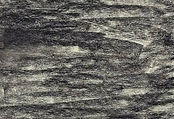


I repeatedly worked on the same drawing, Part of What If it.


Part of What If it .
Or I would blur them using linear marks.


Part of What If it.
Susan Stewart, in On Longing: Narratives of the Miniature, the Gigantic, the Souvenir, the Collection, points out that emptiness and absence can stimulate the viewer’s imagination, serving as sites for emotional and narrative projection. This made me realize that drawing is not always about “representation”; it can also function as a mechanism for creating space and delay. Emptiness has its own intensity, allowing viewers to complete what is not presented, and this act of completion itself becomes a form of participation.
When I erase an image or leave blurred contours, I am not removing meaning but inviting viewers into an uncertain space of looking. They must imagine between the “visible” and the “invisible,” actively engaging with what cannot be fully confirmed.
For medium, I chose soft pastel because I appreciate its instability. Using fixative would seal the particles, fixing them permanently in a single moment. I deliberately avoid fixative so that the drawing can gradually fade over time. To me, this fading is not destruction but continuation. The marks that were once clear slowly disappear into the air, much like memory being erased by time. As the image becomes blurred, leaving only faint traces even years later, it attains another form of existence: a state suspended between appearing and disappearing.


I gradually came to regard “erasure” as an ethics of memory. Through this process, I also began to question the contemporary obsession with “high definition,” certainty, and “completeness” in image culture. Perfect, technically polished works are displayed in appropriately proportioned white cubes and captured by high-resolution cameras. As Hito Steyerl writes in In Defense of the Poor Image, blurred images retain greater fluidity and freedom. Traditionally, “high-definition images,” film prints, or originals symbolize visual authority controlled by capital and institutions—museums, film festivals, and the art market—whereas the circulation of blurred images represents a democratization of vision. Blur is not a flaw; it is a form of resistance—a resistance to a framed mode of looking.
Yet, as I continued to erase, I began to question who decides what should be “seen” and what should be “hidden.” Is it my choice, or is it determined by the visual language of the moment? “Dissipation” is not merely temporal but also political—it resists a cultural logic in which everything “must be seen.” Visibility implies power: who can be seen and who controls the conditions of being seen. Perhaps the distinction between the visible and the invisible is not naturally given but arranged by an invisible “frame.” This led me to turn my attention toward the frame itself.
Next: II. Within and Beyond the Frame
Reference:
Bachelard, G. (1994) The Poetics of Space. Translated by M. Jolas. Boston: Beacon Press.
Derrida, J. (1976) Of Grammatology. Translated by G.C. Spivak. Baltimore: Johns Hopkins University Press.
Stewart, S. (1993) On Longing: Narratives of the Miniature, the Gigantic, the Souvenir, the Collection. Durham, NC: Duke University Press.
Steyerl, H. (2009) ‘In Defense of the Poor Image’, e-flux Journal, 10. Available at: https://www.e-flux.com/journal/10/61362/in-defense-of-the-poor-image/ (Accessed: [21.10.2025]).
Martin, A. (1963) This Rain [painting]. Collection of the artist.
Martin, A. (1957) Harbor Number 1 [painting]. The Museum of Modern Art, New York.
Diebenkorn, R. (1967–1988) Ocean Park series [paintings]. Various collections.